Home / News + Politics / Forum / One in four gay DC teens have attempted suicide. This has to stop.
One in four gay DC teens have attempted suicide. This has to stop.
The Youth Risk Behavior Survey reveals alarming details about DC's LGB youth
By Lucius Campany, Kimberly Horn and Stacy Manuel
August 25, 2017
Every two years in middle and high schools in DC, students complete the Youth Risk Behavior Survey (YRBS). From this survey, DC’s Office of the State Superintendent of Education (OSSE) compiles data on issues such as drug use and mental health.
With the recent release of the 2015 YRBS report, we can see how students of color fare compared to white students, and how lesbian, gay, and bisexual students fare compared to heterosexual students. Additionally, the report provided a count of trans students (2.4% of the high school population), but no analysis of their risk data. The data is alarming, and has been for several years.
On drug use, LGB youth account for one-fifth of all reported use in both middle and high school students. Even though LGB students only make up 14% of the population in DC high schools, 20% of all high school drug use comes from this group, a pitiful overrepresentation. To compound this issue, drug use is significantly correlated with depression in students. Research also shows that students suffering from depression are more likely to do worse in school.
The YRBS reports that LGB students are not only more likely to be at increased risk for bullying, harassment and physical assault, but also are nearly three times more likely to think seriously about, plan, and attempt suicide. One in four, or 24.9%, of high schoolers identifying as LGB have attempted suicide.
Though the YRBS includes information for students of color and LGBT students separately, it does not include much data on LGBT students of color, meaning we cannot understand how double-minority students may fare.
Regardless of race and sexual orientation, we have serious unaddressed problems concerning mental health and substance abuse. The Children’s Law Center 2016 report estimated that 5,000 children are not receiving the mental health services they need. Now, the YRBS gives city officials the potential to target specific areas and populations for increased support.
Knowledge has not given way to any real responsibility yet, but we see an opportunity for DC to increase appropriate school-based prevention and intervention services to meet glaring needs.
Recently, Nathan Luecking, a Delegate for 1199 SEIU representing School Mental Health Program Social Workers, created a change.org petition against proposed ‘privatization’ plans to district-wide school-based mental health services. The Mayor’s budget originally planned to take the onus of direct care away from clinicians in the Dept. Of Behavioral Health and put it on already-strapped community service agencies.
Mr. Luecking’s petition against this change got the attention of the Council. Councilmembers Gray and Grosso led the vote to amend the Mayor’s budget, calling for a working group to reconstruct a more comprehensive mental health care delivery plan. Mr. Luecking said the vote also preserves full time clinical therapists in over 60 DC schools for the time being.
The original plan included increased attention to schools that are more “at risk.” While great in theory, it may come at the cost of reducing services at less “at risk” schools and failing to provide high quality care across the board. For LGBT youth advocates like us, the biggest challenge is lack of clarity on how, if at all, YRBS data at the school level will inform services or whether queer youth data will even be considered. Mr. Luecking assured us, “Consistent clinical mental health services in schools are key to supporting LGBTQ youth because they are a population at high risk for mental health conditions.”
District public and charter schools should not only aim to improve the standards of mental health care, but also maintain a standard in prevention. This means a plan-of-action that consistently covers and supports every student to ensure good mental health, such as increasing student education and awareness of these issues in the first place.
In addition, it is important that we collect more extensive information on LGBTQ youth, specifically information on transgender students and mental health screening and service utilization statistics. Currently with the YRBS, the lack of data reported on is unacceptable. Since the YRBS neglects to extensively report on transgender students we have to turn to more general reports such as those put out from the DC Trans Coalition, which report on the community as a whole, not specifically trans youth.
For example, this report shows that 60% of transgender people had seriously considered suicide, 34% had attempted suicide, and 10% had attempted suicide in the past 12 months. As well it tells us how of those surveyed, 42% reported using drugs like heroin, cocaine, PCP, or methamphetamines either currently or in the past. We can see how alarming this data is and should recognize that this may affect transgender youth differently, therefore we need the data specifically for trans youth which the YRBS neglects to gather.
We encourage you to download the YRBS report and talk to your family and friends about the data. Get involved in the future of healthcare delivery in our communities’ schools. If you are a parent, speak to your children about risks they might face. Listen to their stories. Collectively, they are already telling us something must be done.
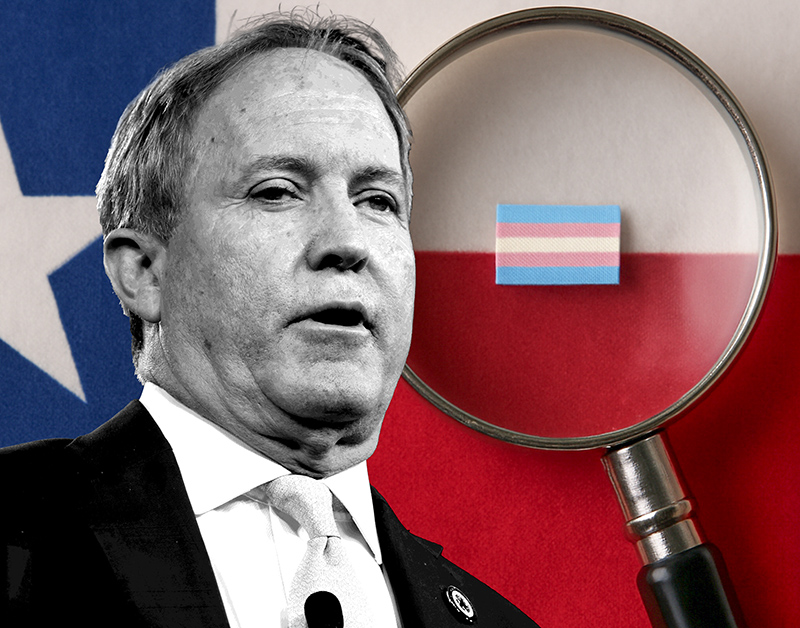
Mental health providers licensed in Texas are barred from offering therapy that could be interpreted as assisting minors in transitioning, according to a legal opinion from Texas Attorney General Ken Paxton.
In the February 27 opinion, Paxton responded to an inquiry from Darrel Spinks, executive director of the Texas Behavioral Health Executive Council, about whether a 2023 law applies to licensed therapists and counselors.
The law, Senate Bill 14, bans health care providers from providing or facilitating treatments for minors -- including puberty blockers, hormones, or surgical interventions -- intended to help them medically transition. It also prohibits public funds, including Medicaid, from covering the cost of transition-related care.
President Donald Trump reportedly laughed aloud after being briefed by U.S. intelligence that Iran’s new Supreme Leader, Mojtaba Khamenei, may be gay -- and that his father, the late Ayatollah Ali Khamenei, allegedly considered him unfit to rule for that reason.
According to the New York Post, Trump was stunned by the news, while others in the room reportedly found the intelligence “hilarious” and joined him in laughing at the irony -- particularly given Iran’s harsh laws criminalizing homosexuality.
A Massachusetts-based LGBTQ advocacy group is warning of a reported surge of anti-LGBTQ harassment in local high school sports, particularly hockey teams.
In a March 3 open letter to Massachusetts Attorney General Andrea Campbell, the group, Lawyers for Civil Rights Boston (LCR), warned that identity-based bullying of LGBTQ youth remains a problem on some high school sports teams. The letter says the behavior is exacerbated by "team hierarchies, locker room culture, and competitive dynamics."
LCR said reports of bullying and harassment targeting youth who are gay or perceived to be gay have spiked within school hockey programs, which the group believes may be connected to the popularity of Heated Rivalry, an HBO series about a romance between two closeted gay athletes.
These are challenging times for news organizations. And yet it’s crucial we stay active and provide vital resources and information to both our local readers and the world. So won’t you please take a moment and consider supporting Metro Weekly with a membership? For as little as $5 a month, you can help ensure Metro Weekly magazine and MetroWeekly.com remain free, viable resources as we provide the best, most diverse, culturally-resonant LGBTQ coverage in both the D.C. region and around the world. Memberships come with exclusive perks and discounts, your own personal digital delivery of each week’s magazine (and an archive), access to our Member's Lounge when it launches this fall, and exclusive members-only items like Metro Weekly Membership Mugs and Tote Bags! Check out all our membership levels here and please join us today!







You must be logged in to post a comment.