United States Supreme Court – Photo: Sean Pavone via iStockphoto
The U.S. Supreme Court has rejected an emergency request from the Trump administration to overturn a lower court’s order blocking restrictions on gender-affirming medical care and social accommodations for transgender inmates in federal prisons, as reported by Chris Geidner at Law Dork.
On the first day of his second term, President Donald Trump signed an executive order defining sex as biologically determined at conception and refusing to recognize transgender identities. The order also directed the Federal Bureau of Prisons to change its policies governing transgender inmates, including where they are housed and their access to medications, clothing, and canteen items.
The Federal Bureau of Prisons announced several policy changes throughout 2025 and 2026 that would deny transgender inmates access to gender-affirming surgery, hormone treatments, and “social accommodations” such as wigs, padding, and makeup, according to NBC News. The Trump administration has also asserted that gender-affirming care is medically suspect and does not alleviate gender dysphoria.
Under the proposed restrictions, transgender inmates would have been limited to mental health services and medications such as antidepressants.
A group of transgender inmates, represented by the American Civil Liberties Union, sued, arguing that the government had failed to adequately justify the changes to medical care and other services available to prisoners. They also alleged that denying medically necessary care worsens their gender dysphoria and violates the Eighth Amendment’s prohibition against “cruel and unusual punishment.”
The case’s lead plaintiffs — Alishea Kingdom, Jas Kapule, and Solo Nichols — have all received hormone therapy for years.
In February 2025, Senior U.S. District Judge Royce Lamberth of the District of Columbia issued a temporary restraining order blocking the Trump administration from restricting gender-affirming care and transferring transgender women out of female prisons.
Lamberth, a Reagan appointee, issued a preliminary injunction in June 2025. In February 2026, he ordered federal prison officials to explain why they should not be held in civil contempt over allegations of retaliation against a transgender inmate involved in the lawsuit. He issued a new preliminary injunction in June 2026 after the U.S. Court of Appeals for the D.C. Circuit required a more individualized assessment of prisoners’ housing placement claims.
In his June 2026 ruling, Lamberth found that the Bureau of Prisons had failed to consider its history of providing gender-affirming care, including hormone therapy, which has been available to inmates with gender dysphoria since 1992. He also found that the agency had failed to provide evidence that such treatments were ineffective or harmful to transgender inmates.
Lamberth concluded that the Bureau of Prisons’ proposed policy changes appeared designed to comply with Trump’s executive order, with the agency’s other justifications serving as a pretext for carrying out the president’s wishes.
Last month, the U.S. Court of Appeals for the D.C. Circuit voted 2-1 to reject the Trump administration’s request to block Lamberth’s ruling. Solicitor General D. John Sauer accused Lamberth of judicial activism and the court of “substituting its own policy judgment for that of the agency,” according to NBC News.
The Trump administration subsequently filed an emergency application with the U.S. Supreme Court, which rejected the request and allowed Lamberth’s injunction to remain in place. The justices did not rule on the merits of the case, leaving open the possibility that the injunction could be overturned later.
The Supreme Court offered no explanation for its decision. Only Justices Clarence Thomas and Samuel Alito indicated they would have granted the Trump administration’s request.
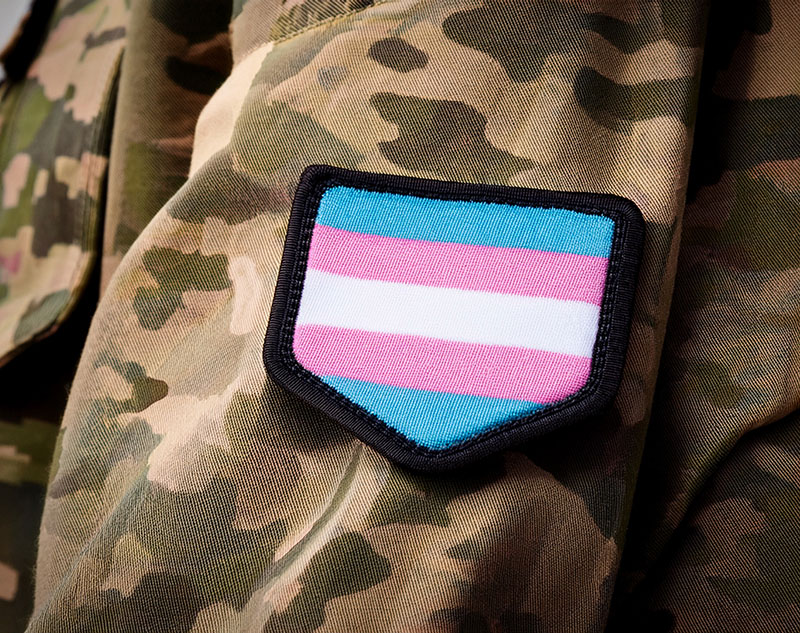
The decision marks a rare victory for transgender advocates at the Supreme Court, which has upheld state bans on transgender athletes competing in female-designated sports and gender-affirming care for minors. The court has also allowed the Trump administration to ban transgender people from military service and discharge those already serving.
“Today’s ruling affirms that everyone, trans or not, deserves access to medically necessary health care and to be treated with dignity in federal custody,” said Shawn Thomas Meerkamper, managing attorney at the Transgender Law Center, which is representing the plaintiffs alongside the ACLU and ACLU of D.C.
An estimated 1,000 transgender inmates are currently in federal custody.
Josh Turek, Iowa's Democratic nominee for U.S. Senate, has drawn criticism for an ad opposing transgender women competing in women's sports and Medicaid coverage for gender-affirming surgery.
Turek, a wheelchair basketball Paralympian and state representative from Council Bluffs, released the ad, titled "Stop the Nonsense," addressing his positions on transgender issues -- a subject his opponent, Republican U.S. Rep. Ashley Hinson, has repeatedly attacked him over.
Yet the criticism and outrage directed at Turek for the transgender issues ad -- from across the ideological spectrum -- have muddled his "closing message" and overshadowed a much more powerful ad featuring his sister, Ulette, who is fighting cancer and whose insurer denied coverage for a scan to determine whether her cancer had spread through the bloodstream.
Democratic lawmakers are demanding answers from Secretary of War Pete Hegseth following reports that transgender service members forced out of the military under President Donald Trump's ban have not received separation pay they are owed.
Trump implemented a more limited ban during his first term, generally requiring transgender troops to serve according to their assigned sex at birth and barring medical transition. The policy exempted certain service members already serving openly or diagnosed with gender dysphoria before it took effect.
But after returning to office last year, Trump issued an executive order aimed at removing nearly all transgender personnel from the military, reinforcing a separate order refusing to recognize transgender identity as valid.
U.S. Sen.-elect Chris Pappas (D-N.H.) says he's prepared to vote against President Donald Trump's judicial nominees if they won't commit to respecting Supreme Court precedents that protect LGBTQ rights, including marriage equality.
"I need to know that respect the precedent that has been set in Obergefell and other decisions that have ensured a right to privacy and ensured that individuals have the freedom to be themselves and make their own decisions," Pappas told The Advocate's Christopher Wiggins in a post-election interview.
Pappas, who became the first out gay man elected to the U.S. Senate by defeating former U.S. Sen. John Sununu (R), said he would withhold support from judicial nominees who refuse to follow Supreme Court precedent or decline to answer questions about their views on LGBTQ equality.






You must be logged in to post a comment.